Can I get planning permission on land I own? The five checks to make first
The question arrives in different forms. Can I build a house at the bottom of my garden? Could the paddock take a couple of bungalows? Is the old yard worth anything as a plot? Underneath, it is the same question: could I get planning permission on land I already own, and how would I know before spending money finding out?
Here are the five things that decide it, in the order a planning officer thinks about them.
1. Where the settlement boundary falls
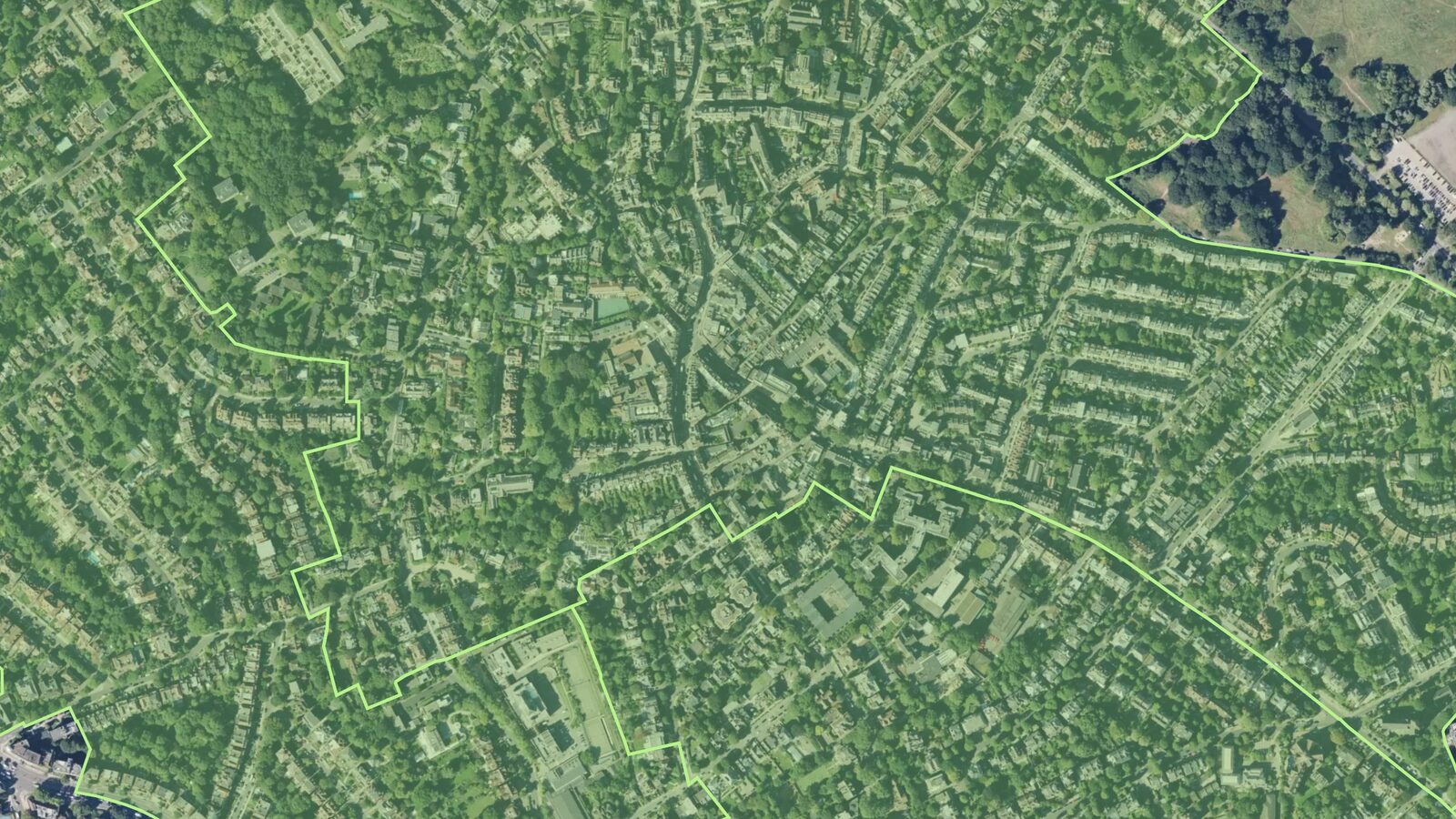
Most councils draw a line around each town and village in their local plan. Inside the line, new homes are acceptable in principle and the argument is about design and neighbours. Outside it, you are in "open countryside" and the starting point is no, with a short list of exceptions. This one line decides more applications than any other factor, and most landowners have never seen it.
The line does not follow property boundaries. Long gardens on the edge of a village are often cut in two, with the house inside the settlement and the end of the garden outside. That is why one neighbour gets permission for a garden plot and the next does not.
2. Which designations cover the land
Green Belt, National Landscape (the new name for Areas of Outstanding Natural Beauty), National Park, conservation area, flood zone. Each one adds a policy test, and some of them close the door for new houses almost entirely. Flood zone 3 is the most common surprise: a plot beside a stream that has never flooded in living memory can still be mapped as high risk, and housing there needs a sequential test that a single plot will rarely pass.
None of this is secret. Every designation is published, and our district pages show how much of each postcode area they cover. But a district figure tells you about the neighbourhood, not your boundary. You need the check done on the plot itself.
3. Access
A planning officer will ask how a car reaches the new house and whether a fire engine can. A plot with no frontage onto a road, reached only over someone else's driveway or through a gap in a hedge, has a problem that no amount of good design fixes. Visibility at the junction matters too. Highways objections are one of the most common reasons small schemes are refused, and they are usually visible from the first look at a map.
4. What the neighbours can see and hear
Overlooking, loss of light, and the sheer bulk of a new building close to existing ones are the everyday reasons garden plots fail. Councils publish separation distances and daylight guidance, and a plot that cannot meet them without an awkward design is a plot that will struggle. The size of the land is less important than its shape and where the neighbouring windows are.
5. What has been decided nearby
Planning is case by case, but it is not random. If three garden plots in your road have been approved in the last five years, the council has accepted the principle. If two were refused for the same reason, that reason will apply to you too. Reading the recent decisions on your street is the cheapest research there is, and it is where we start.
What to do before you ask anyone
Do not commission an architect or a planning consultant to answer the first question. The five checks above are answerable from public records, and they should be answered before anyone charges you for a design. If the settlement boundary, the designations and the access all fall the right way, then it is worth paying for advice on design and neighbours. If they do not, you have saved yourself a fee and a year of hope.
Our free assessment runs those five checks on your actual boundary and sends you a written answer within 48 hours: what is realistic, what would need to change, and what it might be worth. If the honest answer is no, we say no.
Own land somewhere in particular? The Land by postcode pages show recent sales, planning designations and the deciding council for each district.
More articles
Can I Apply for Planning Permission on Land I Don't Own?
Yes. Anyone can apply for planning permission on land they don't own, but they must notify the owner using the correct ownership certificate.
How Much Is CIL on a New Home in London?
It depends on your borough and zone, and is charged per square metre on top of the Mayor's London-wide rate. Self-builders can often claim an exemption.

Airspace Development: Can I Build on Top of My Building?
Often yes, under permitted development rules that allow extra storeys on houses and blocks of flats, subject to prior approval and strict conditions.
Check your land for free
Find out which constraints affect your property and what your options are. Takes two minutes.
Check my land →