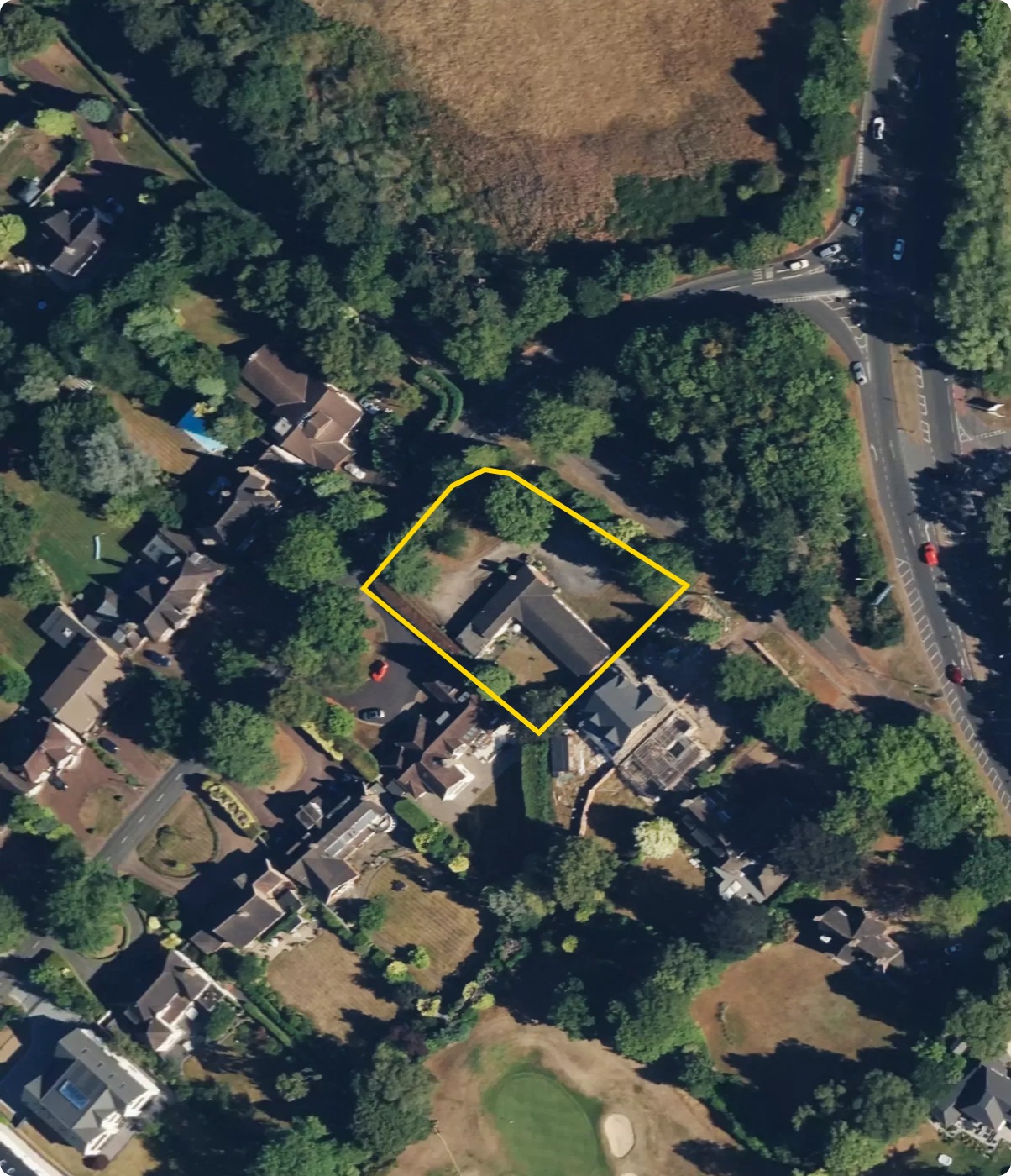
How many homes should you apply for on your London plot?
Landowners often ask whether it is easier to get permission for one home or to try for more. The answer from London's decisions is more surprising than you might expect: the number of homes matters much less than the borough does, apart from a few places where it matters a great deal.
What we counted
We looked at every small housing application London's councils decided since January 2021 where the applicant's form declared between one and nine net new homes, 11,369 in total, and split them into three sizes.
- One home: 5,207 decided, 2,520 approved (48 per cent)
- Two or three homes: 3,771 decided, 1,873 approved (50 per cent)
- Four to nine homes: 2,391 decided, 1,089 approved (46 per cent)
Across London as a whole, then, there is barely any difference. Asking for more homes does not, on average, make an approval much less likely.
Where size does matter
The averages hide boroughs where the pattern is very different.
In Ealing, schemes of two or three homes were approved 67 per cent of the time (410 of 609), against 54 per cent for single homes (257 of 476). In Harrow, the same two-or-three-home band was approved 46 per cent of the time (116 of 250), against 28 per cent for single homes (43 of 152).
In Merton, schemes of four to nine homes were approved 79 per cent of the time (62 of 78), the highest of any band in any large borough.
In the other direction, Kingston approved only 20 per cent of four-to-nine-home schemes (8 of 41), Harrow 22 per cent (17 of 76) and Croydon 25 per cent (61 of 244). In those boroughs a larger scheme is a much harder sell.
What this means in practice
The planning case for one home on a garden is mainly about the plot: access, neighbours, trees, the shape of the land. Adding homes brings in extra tests: parking, refuse, amenity space, and, from ten homes, affordable housing obligations, which is why this analysis stops at nine.
If you are choosing between one and several homes, look at your borough's figures first. Where larger schemes do well, the extra homes can make the land considerably more valuable to a developer. Where they do not, a modest scheme that fits is usually the better route.
You can see how a developer would value each approach in what a developer will pay for your land.
Figures: decided planning applications since 1 January 2021 from the councils' own registers, joined to the applicant's planning form; counts, not estimates. Tower Hamlets, Newham, Wandsworth and Haringey are not yet in our data.
Own land somewhere in particular? The Land by postcode pages show recent sales, planning designations and the deciding council for each district.
More articles
How long does planning take in London for a small scheme?
The median small housing scheme in London takes 92 days to decide, from 57 days in Barking and Dagenham to 329 in Camden.
Which London boroughs approve small housing schemes
We ranked London's boroughs by how often they approved schemes of one to nine homes since 2021, from Merton at 71 per cent to Havering at 30.
Where do I start with planning on my London land?
A seven-step order of play for a London landowner who thinks a plot might take a home or two: constraints, precedent, access, route and council.
Check your land for free
Find out which constraints affect your property and what your options are. Takes two minutes.
Check my land →