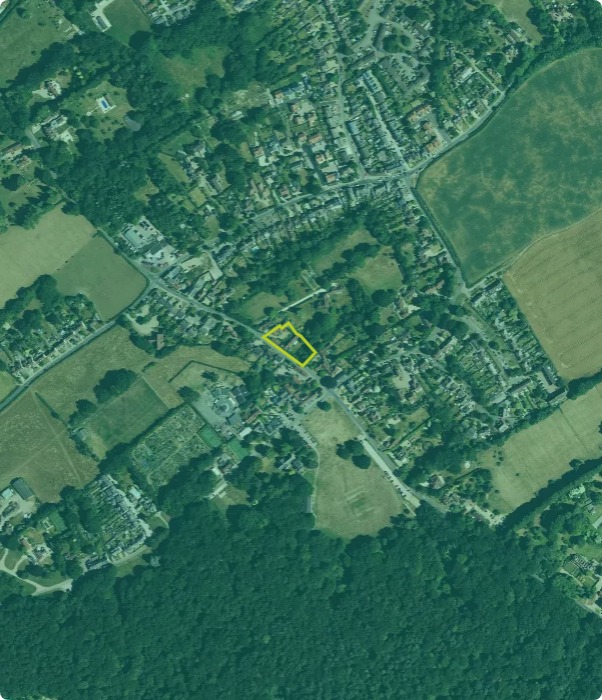
Should I sell my garden for development?
Garden land is gold to developers. Urban gardens often sit in locations where housing is desperately needed, infrastructure is already in place, and planning gain is substantial. But not all gardens are developable, and not all that are developable are worth selling. Here's how to figure out if yours has value.
What makes a garden developable?
Size
Most councils want minimum plot sizes for new homes. In London and Southeast England, a typical requirement is 0.1–0.2 hectares (about 30m × 35m or larger) for one house. Split a garden into two plots? You need at least 0.2 hectares. Larger gardens clearly have more potential.
Access
Can you reach the garden from a public road? Can construction vehicles access it? If your garden is accessible only through another property, permission is unlikely. If the only access is a narrow footpath, development won't work.
Services (utilities)
Water, electricity, gas, and sewers must reach the site or be available nearby. If you're in mains drainage and have utilities, you're good. If you're on a septic tank and a small water tank (common in rural areas), development is much harder.
Shape and constraints
Rectangular gardens develop more efficiently than L-shaped or sloping ones. Contamination (industrial history), flooding, protected trees, or ecological sensitivity all reduce viability. A surveyor can assess these in a day.
Council policies
Some councils encourage garden development; others heavily restrict it (especially in conservation areas or green belt). Check your Local Plan and any recent guidance on "garden land" or "residential infill."
The planning question: outline vs full permission
Most residential gardens qualify for outline planning permission if they meet size, access, and policy requirements. Outline permission confirms the principle of development. Full permission requires detailed designs. For gardens, outline is usually the goal-it unlocks land value without needing to agree on exactly which house design goes there.
What to expect: money and timeline
Planning cost: Outline planning applications cost £1,500–£3,500 for a simple garden extension (1–2 houses). More complex sites cost £5,000–£15,000. An architect and planning consultant can advise on your chances.
Timeline: Planning takes 8–13 weeks for outline. Appeals (if refused) add another 6–12 months.
Sale value: A garden with outline planning for one house typically sells for 3–10x its current garden use value. A 0.15-hectare garden currently worth £50,000 might sell for £150,000–£300,000 with outline planning-depending on location and local house prices.
The process: do it yourself or find a promoter?
Self-promotion: You hire an architect, apply for planning, and sell the land with permission. You pay planning costs upfront and capture full planning gain-but you take the planning risk.
Promoter route: A specialist promoter (often a local architect or developer) takes on planning risk, pays costs, and takes a share (usually 30–40%) of the uplift. You get cash certainty and no planning stress, but lower returns.
Red flags
Be cautious if: the garden is in green belt (very hard to get permission unless special circumstances apply); you have only footpath access; the garden is in a conservation area (more restrictions apply); there are protected trees (surveys cost money and delays happen); or the local council has recently refused similar applications (policy may be against garden development).
What to do next
Measure your garden (length and width). Check if it meets council minimum sizes. Walk the boundaries and confirm public road access. Then get a free assessment of planning potential and realistic value. We'll tell you whether your garden is worth pursuing and what deal structure makes sense.
More articles
What is a planning constraint: and does yours matter?
Planning constraints affect what you can build on your land. But not all constraints are equal, some are deal-breakers, others just change the path forward.
What does 'development potential' actually mean?
The phrase gets thrown around constantly, but what does it actually mean when an estate agent, developer, or solicitor says your land has development potential?
The three things that decide every land deal
Whether you're selling a garden plot or a farmyard, every land transaction comes down to the same three variables. Understanding them changes how you think about your options.
Check your land for free
Find out which constraints affect your property and what your options are. Takes two minutes.
Check my land →