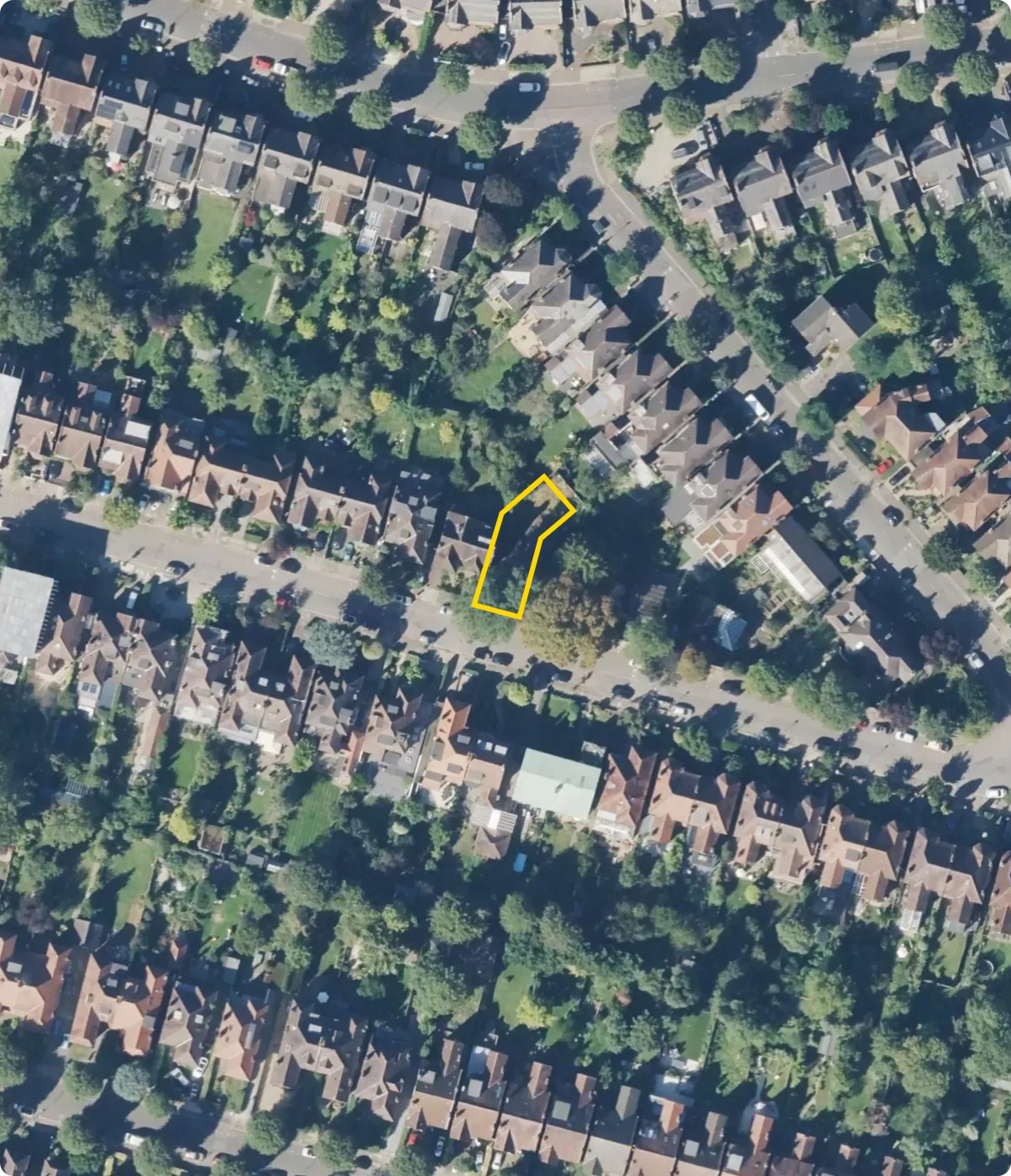
You own a piece of land in London and you suspect it might take a home or two. You do not know where to start. This is the order we would do things in.
1. Find out what the land is
Before anything else, confirm what you actually own and what it is classed as. Your title plan from HM Land Registry shows the boundary. Check whether the land is garden, a garage court, commercial yard or something else, because the planning policies differ.
2. Check the constraints
The things that most often decide an outcome are not about design. They are conservation areas, listed buildings next door, flood zones, protected trees, and whether the land is protected open space. A free Check My Land report shows these for your boundary. Our guide to planning constraints explains what each one means.
3. Look at what your council has approved nearby
This is the most useful evidence you can have. Find applications within a few streets for similar schemes, and note which were approved and which were refused, and why. Our London postcode pages list these by district, with counts and examples. London approves 48 per cent of small housing schemes overall, but boroughs range from 30 per cent to 71 per cent, so your borough matters.
4. Think about access and neighbours
Two things sink more small schemes than any others: a plot with no safe, legal access to the road, and a design that overlooks or overshadows neighbours. Walk the plot and note the distance to every neighbouring window.
5. Decide your route
There are three ways to realise value from the land.
- Sell it as it is, to a buyer who will take the planning risk.
- Sign an option agreement with a developer who pays for planning and shares the uplift.
- Apply for planning yourself and sell with permission.
Each has different costs, timelines and risks. What a developer will pay for your land covers how buyers value each.
6. Talk to the council early
Most London boroughs offer a pre-application service for a fee. It gives you a written view from a planning officer before you commit to a full application. If you are doing planning yourself, it is usually money well spent.
7. Get an independent view
The cheapest sensible step is a view on your specific plot, not the borough average. The free check tells you what the land is and what constrains it. The Land Value and Options Report sets out what it could be worth under each route, for £95, refunded if it does not give you a clear answer.
Own land somewhere in particular? The Land by postcode pages show recent sales, planning designations and the deciding council for each district.
More articles
How many homes should you apply for on your London plot?
Across London, one home, two to three homes and four to nine homes are approved at similar rates, but a few boroughs behave very differently.
Which London boroughs approve small housing schemes
We ranked London's boroughs by how often they approved schemes of one to nine homes since 2021, from Merton at 71 per cent to Havering at 30.
Can my land in London be developed? What 9,756 small-scheme decisions since 2021 say
Since 2021 London councils decided 9,756 applications for one to nine new homes and approved 47 per cent. Borough by borough, where small schemes and garden plots get permission, where they do not, and how long it takes.
Check your land for free
Find out which constraints affect your property and what your options are. Takes two minutes.
Check my land →